BUILDING AUTONOMY VS. BUILDING aUTOMATION
Autonomy Pursues Objectives. Automation Follows Instructions.
Building automation connects equipment and executes engineered control strategies. Building autonomy uses models of connected physical systems to evaluate actions against operational goals.
The difference is how decisions are made—and how much operating logic engineers must define in advance.
AUTONOMY vs. AUTOMATION
Instructions vs. Outcomes
Set the temperature.
Predefined rules control the system.
Decides based on goals.
The system determines how to achieve your goals.
AUTOMATION FOLLOWS INSTRUCTIONS. AUTONOMY PURSUES OBJECTIVES.
What Is Building Automation?
Building automation systems (BAS/BMS) monitor and control equipment such as heating, ventilation, air conditioning, and lighting.
They use sensors, controllers, schedules, and programmed logic to maintain conditions across a building. Advanced systems can also incorporate optimization, predictive models, and integrated supervisory control.
Engineers define the control strategies, configure equipment relationships, and maintain the logic as requirements change.
Automation
The system follows predefined instructions.
What Is Building Autonomy?
Building autonomy shifts more operational decision-making from predefined sequences to a model of the building.
The system represents equipment, physical relationships, objectives, and constraints. It uses that context to evaluate possible actions and coordinate decisions across connected systems.
Engineers still define the system’s capabilities, goals, constraints, and oversight. Autonomy changes how operational decisions are generated within those boundaries.
Autonomy
The system determines how to achieve a goal.
Buildings make decisions, predict what's coming, and learn from experience.
Building autonomy vs. Building automation: Key Differences
How Autonomous Building Control Works
Autonomous control starts with a model of the building: its spaces, equipment, connections, and physical behavior.
The control engine combines that model with operating data to evaluate possible actions against objectives such as comfort, energy efficiency, and equipment constraints.
Consider a period of rising electricity prices. A programmed strategy might adjust temperature setpoints on a schedule. A model-based autonomous approach evaluates when and how to respond using the building’s thermal behavior, comfort requirements, and equipment limits.

What Does Autonomy Mean for Existing Buildings?
Moving toward autonomy does not necessarily mean replacing every piece of equipment.
A deployment may retain compatible HVAC and mechanical systems while changing elements of the control architecture. The scope depends on existing infrastructure, equipment interfaces, communication protocols, and project requirements.
The starting point is understanding what is installed, how it connects, and what the building needs to achieve.
How PassiveLogic Brings Autonomy to Buildings
PassiveLogic Studio provides tools for creating building models, engineering control systems, and supporting commissioning and operations.
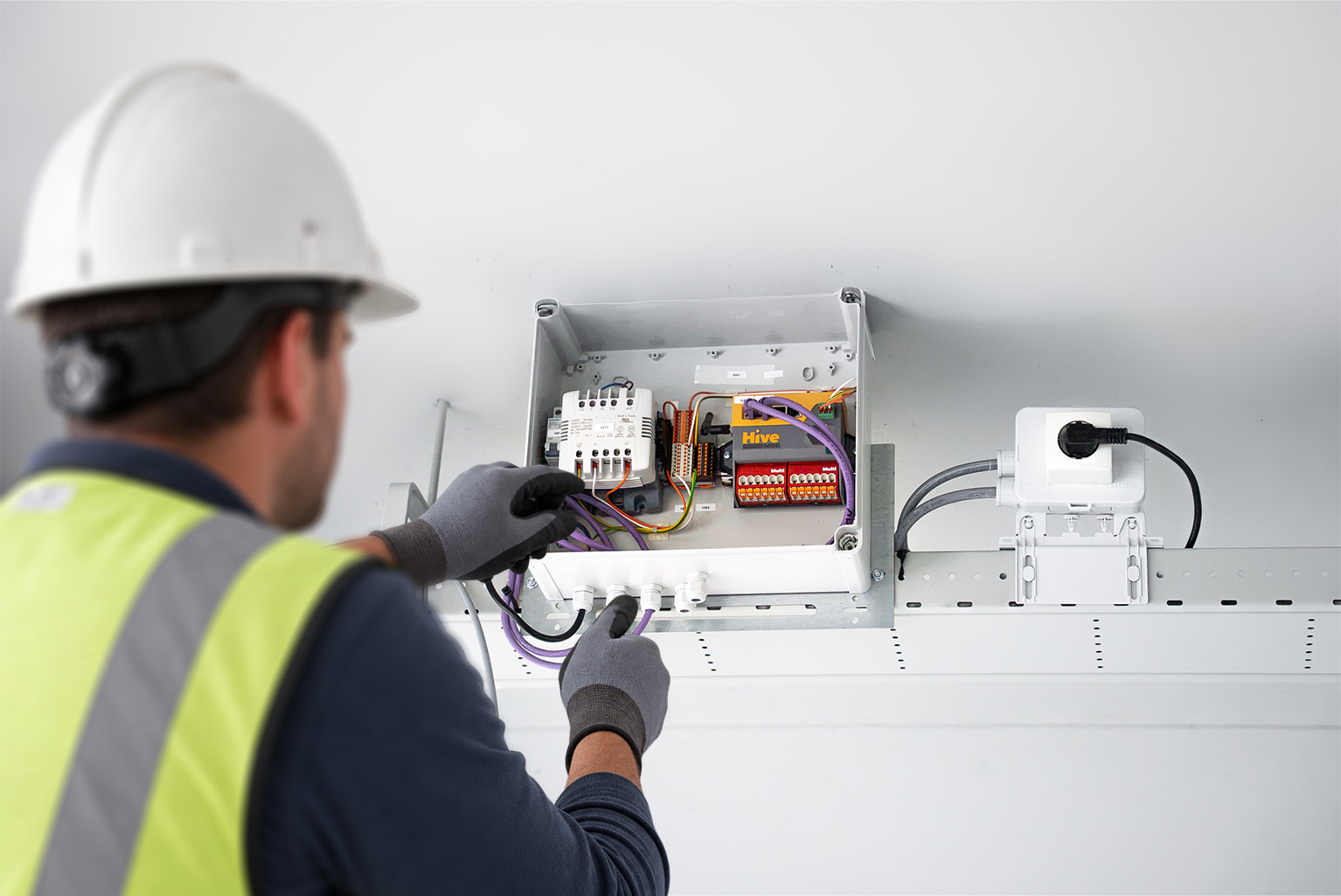
The Hive platform connects autonomous intelligence to physical building systems through controllers, sensors, and configurable I/O.
Together, they establish a connection between the digital understanding of a building and the equipment responsible for operating it.
The Future of Building Control Is Autonomous
Building automation established the foundation for connected, programmable building systems.
Building autonomy extends that foundation toward systems capable of reasoning about the physical environment and coordinating decisions around operational goals.
The result is a different approach to building control—one in which intelligence becomes part of the operating architecture.
Discover PassiveLogic's approach to building autonomy.