Hive Mini

Remote Building Controller

Remote Building Controller

Extend autonomous building control with modular I/O and wired or wireless connections to remote equipment.
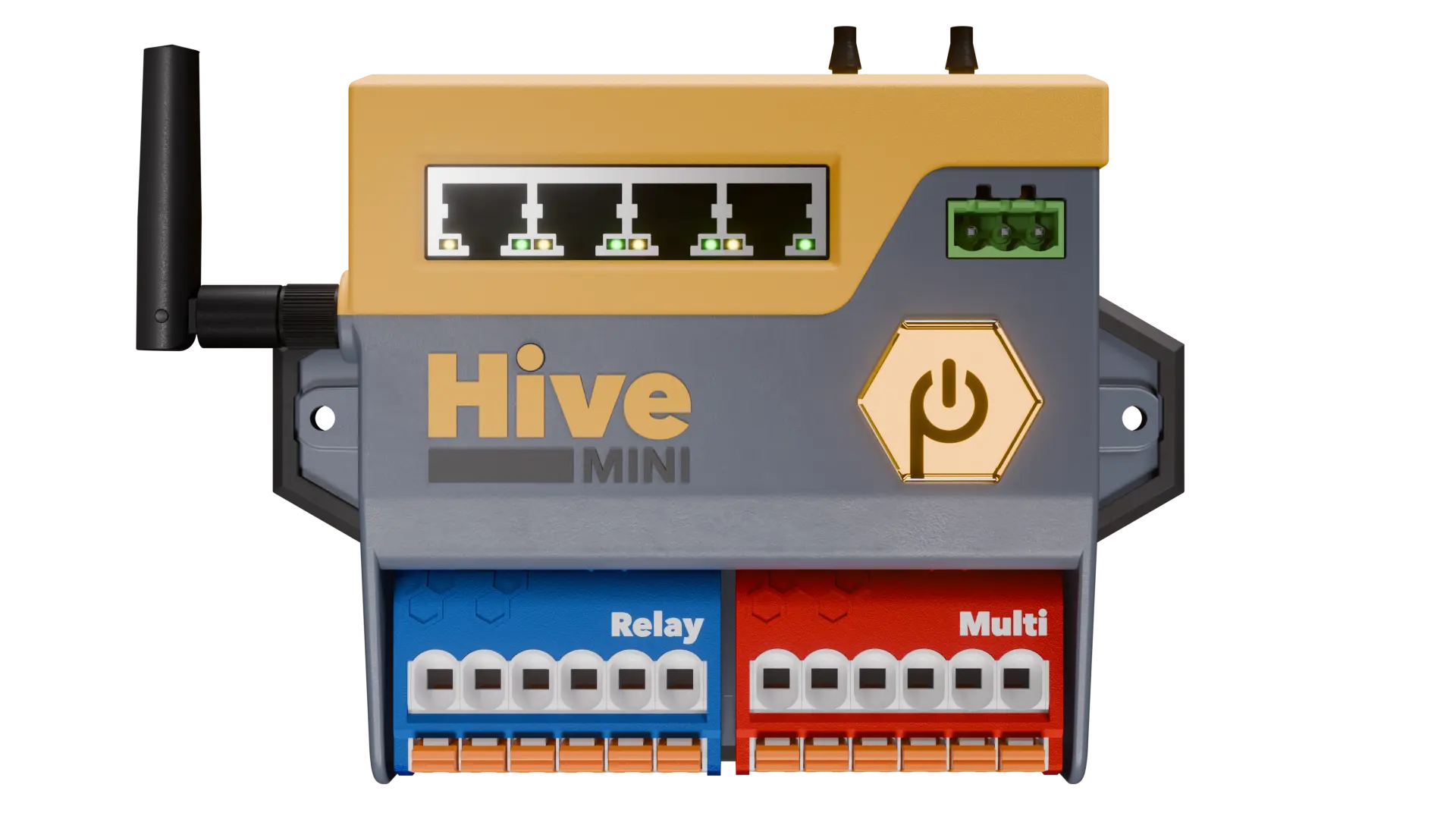
Front view of PassiveLogic’s Hive Mini autonomous building controller against a light gray background, featuring a gray and gold enclosure, wireless antenna, four Ethernet ports, green power terminal, illuminated hexagonal power button, and two color-coded Cell Modules labeled Relay and Multi with six connection terminals each.

Connect Remote Building Equipment

Connect Remote Building Equipment

Connect equipment throughout your building with flexible wired or wireless networking.

Extend Hive. Coordinate Your Building.

Extend Hive. Coordinate Your Building.

Hive Mini connects distributed equipment to the PassiveLogic Hive platform for coordinated building control.

PassiveLogic Hive Mini building field controller installed inside an open electrical enclosure near the ceiling of an industrial space. Purple and orange wiring connects the controller to electrical components and white cable conduits, surrounded by exposed HVAC ductwork and ceiling infrastructure.

Configure Equipment Connections with Cell I/O

Configure Equipment Connections with Cell I/O

Software-defined Cell I/O lets Hive Mini adapt connections for sensors, equipment, and building controls.
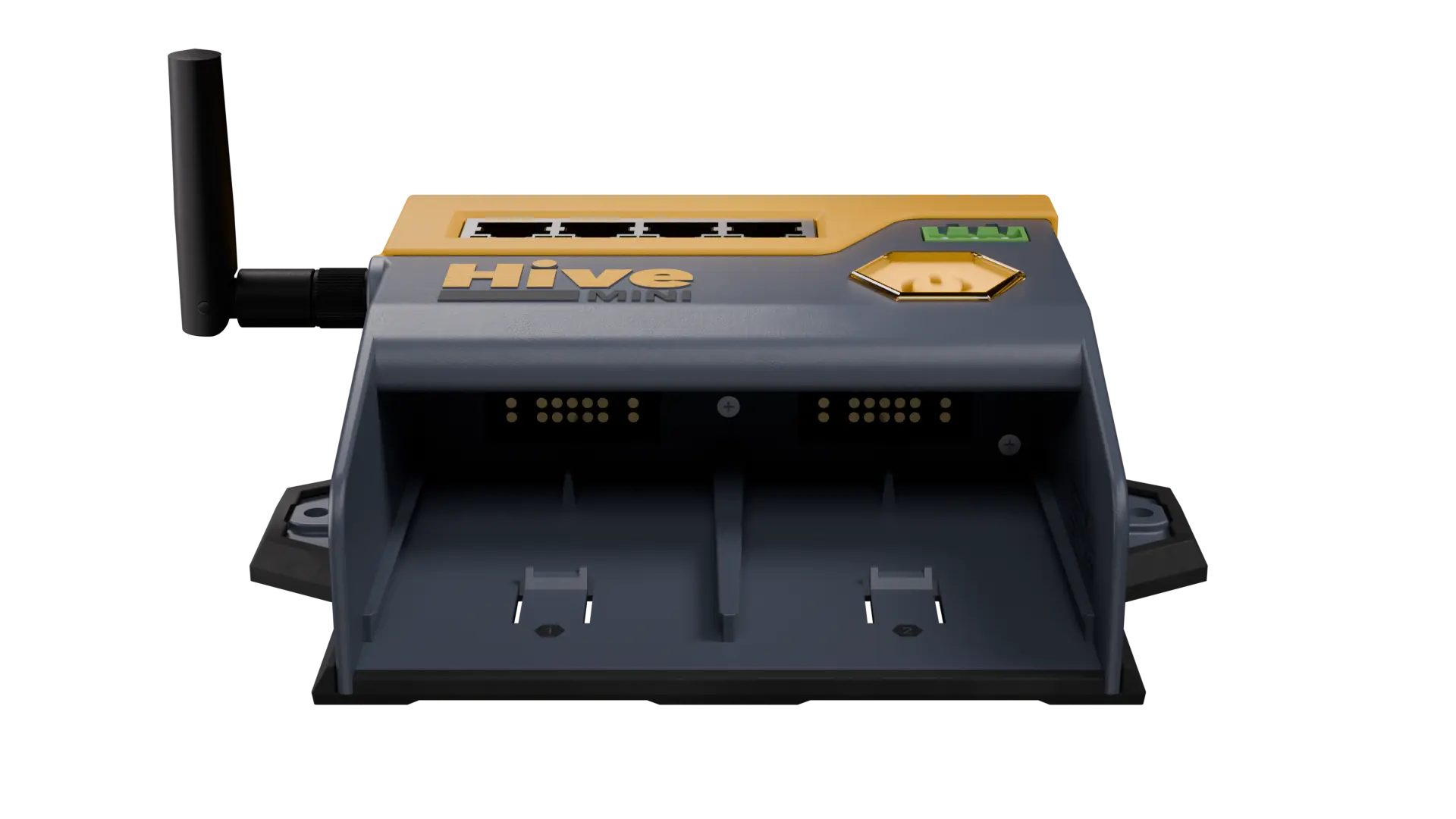
Front view of PassiveLogic’s Hive Mini autonomous building controller against a light gray background, featuring a gray and gold enclosure, wireless antenna, four Ethernet ports, green power terminal, and two empty Cell Module I/O slots with visible electrical contacts for modular I/O expansion.

Hive Mini: Remote Equipment Connections

Hive Mini has two Cell module bays, a four-port industrial Ethernet switch, and BACnet/IP and Modbus TCP support. It also includes a differential pressure sensor with a ±500 Pa range. Wired or wireless connectivity extends equipment connections beyond the main controller. Check the Hive Mini technical specifications for power and installation requirements.
Extend Building Control with Modular I/O

Hive Mini connects equipment and sensors where they are needed. Modular Cell I/O and wired or wireless networking extend the Hive Platform.

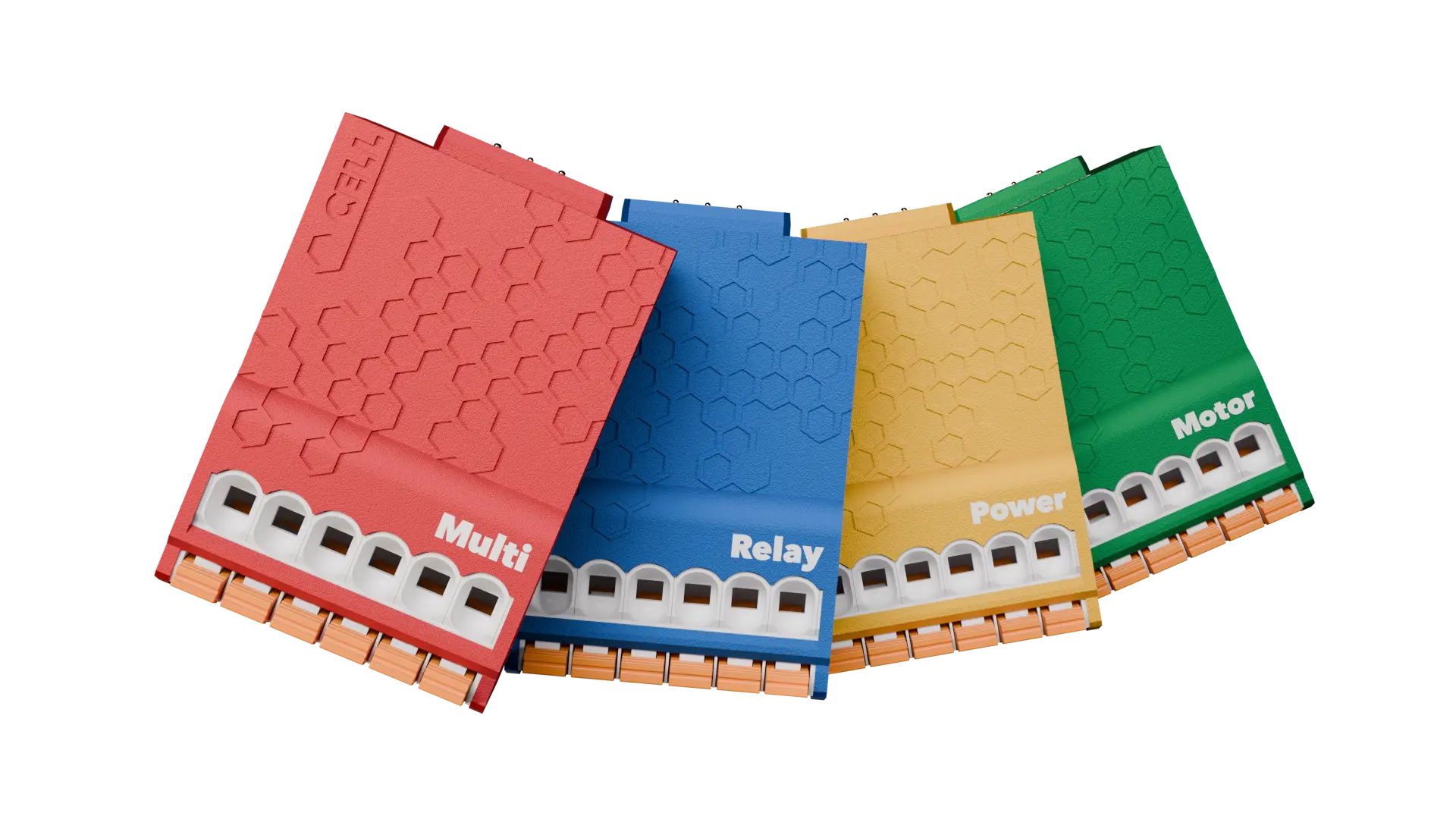
Close-up of PassiveLogic’s color-coded Cell Modules, featuring red Multi, blue Relay, yellow Power, and green Power modules arranged in an overlapping pattern. Each module has a textured hexagonal design, white wiring terminals, and orange connectors, highlighting the modular I/O hardware used in the Hive Autonomous Platform.

Plan Your Hive Mini Deployment

Talk with the PassiveLogic team about extending building control, connecting equipment, and selecting Cell I/O modules for your project.

Explore the Technology Behind Autonomy

Understand how physics-based AI, building world models, and autonomous controls work together.

Explore the Technology Behind Autonomy

Understand how physics-based AI, building world models, and autonomous controls work together.